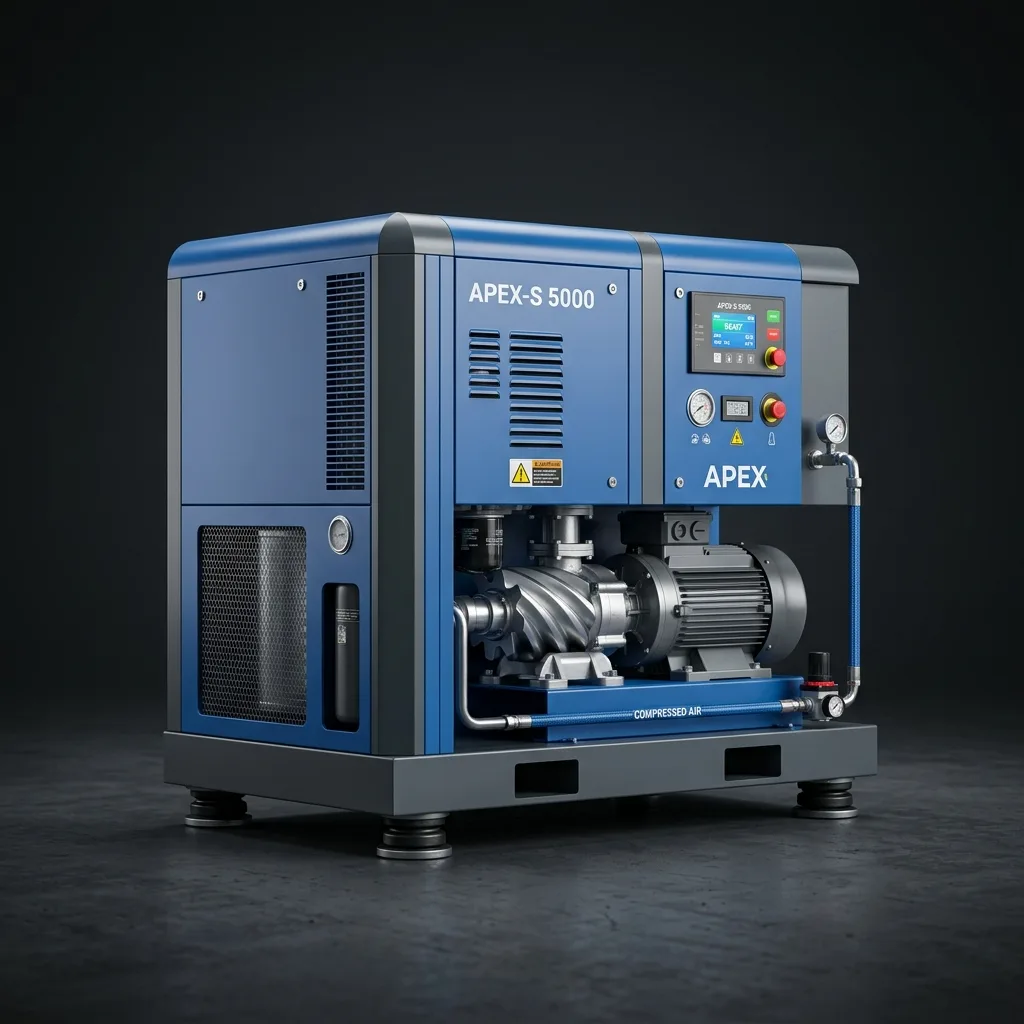
Most compressor failures aren't sudden — they're the accumulated result of small checks that got skipped. The schedule below is the maintenance discipline that pays off most in the field.
The cost of maintaining a compressor is always small next to the cost of unplanned downtime. A stopped production line dwarfs the price of an oil filter. Maintenance should be treated as insurance, not an expense.
The schedule below is written for screw compressors. Piston machines have different intervals — follow the figures in your operating manual.
Every day
- Check the oil level in the tank before starting. Top up if low.
- After a normal start, check the front-panel gauges and confirm every reading is within range.
If you’re topping up oil unusually often, that’s not normal consumption — it’s a sign of a fault. Check the separator, oil return line and seals for leaks and call for service.
Every week
- Check the oil level.
- Drain water that has collected in the oil reservoir.
- Clean the radiator fins with compressed air.
- Clean the dust filter.
- Clean the intake filter.
- Visually inspect internal components.
Radiator and filter cleaning is the step most often skipped. A blocked radiator raises operating temperature, shortens oil life, and is the most common cause of high-temperature alarms.
After the first 800 hours
- Grease the electric motor bearings. Check the motor bearing lubrication chart for type and quantity.
Every 1,000 hours
- Check the control air circuit hoses; replace if needed.
- Check the contactor contacts; replace if needed.
- Replace the dust filter.
- Clean the radiator fins with non-flammable cleaners.
- Check the separator differential pressure; replace the element if blocked.
- Clean the intake and air filters; replace if needed.
- Check all oil circuit fittings.
Every 2,000 hours
- Change the oil and oil filter.
- Check all oil circuit fittings.
- Check all electrical power circuit connections.
- Check belt tension; re-tension if it vibrates excessively during operation.
Every 4,000 hours
- Replace the oil plug O-ring.
- Replace the separator.
- Check all bolted connections.
What happens if these steps are skipped
| Skipped step | Result |
|---|---|
| Oil change | Oil oxidises, varnish and wear build up inside the screw block |
| Separator replacement | Oil carries over into the air line, oil consumption rises |
| Intake filter cleaning | Dust enters the screw block, shortening air-end life |
| Radiator cleaning | Operating temperature rises, high-temperature faults follow |
| Condensate drainage | Water accumulates in the system, causing corrosion and pneumatic equipment failure |
Track running hours, not the calendar
Maintenance intervals are tied to operating hours, not calendar days. A compressor running two hours a day and one running three shifts cannot be on the same maintenance schedule. Log the hour meter regularly — a maintained service record also noticeably raises resale value when selling second-hand.
Under a scheduled maintenance agreement we plan and carry out these checks for you and keep a documented service history. Contact us to have your compressor’s current condition assessed.