Air Receivers.
Storage that damps pressure swings, keeps the system efficient and extends your compressor's life.
What Does an Air Receiver Do?
A receiver does more than store air temporarily; it makes the whole system run more efficiently. It steadies pressure during sudden demand, stops the compressor cycling between load and unload too often, and is where the air first cools and condenses.
A correctly sized receiver reduces how often the motor cuts in, lowering both energy use and mechanical wear. Draining the condensate that collects in the receiver regularly is the single most effective way to prevent internal corrosion.
- Damps pressure fluctuations
- Reduces the compressor's load/unload cycles
- The point where first condensation happens
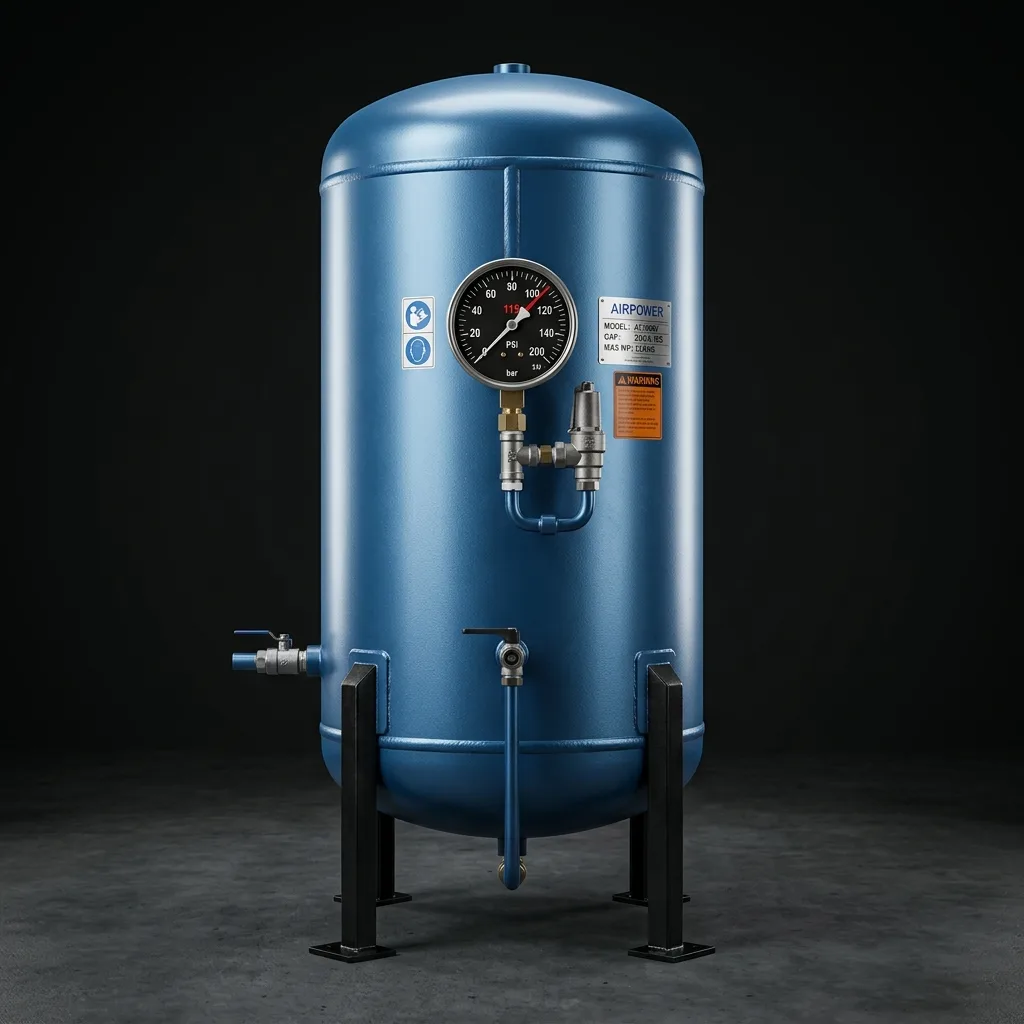
Air Receivers
Brand-independent solutions matched to your operation's compressed air needs.
Air Receiver 500 Litres
Vertical storage receiver for preventing pressure fluctuations in small-scale systems.
Air Receiver 1,000 Litres
High-pressure storage for medium-sized production lines. A receiver test report stamped by the Chamber of Mechanical Engineers is prepared.
Air Receiver 2,000 Litres
Horizontal industrial receiver providing stable pressure on high-consumption lines.
Air Receiver 5,000 Litres
Large-volume storage receiver for heavy industrial plants, suitable for feeding multiple compressors.
Frequently Asked <span class="text-primary">Questions.</span>
What size receiver should I buy? expand_more
A common starting point is a volume matching the compressor's output per minute, but how much demand fluctuates is decisive. Sudden, high consumption calls for a larger receiver. We can determine this together during a site survey.
Is periodic inspection of the receiver mandatory? expand_more
Pressure vessels must be inspected regularly and the result reported, under the regulations covering periodic inspection of work equipment. We prepare test reports stamped by the Chamber of Mechanical Engineers.
Should I choose vertical or horizontal? expand_more
Vertical receivers take up less floor area and are preferred in tight compressor rooms. Horizontal receivers suit places with limited ceiling height and are more practical at large volumes.
A Fast Quote
for Your Project.
Let's work out the compressed air solution that fits your needs. Our specialists will come back to you shortly with a tailored quote.