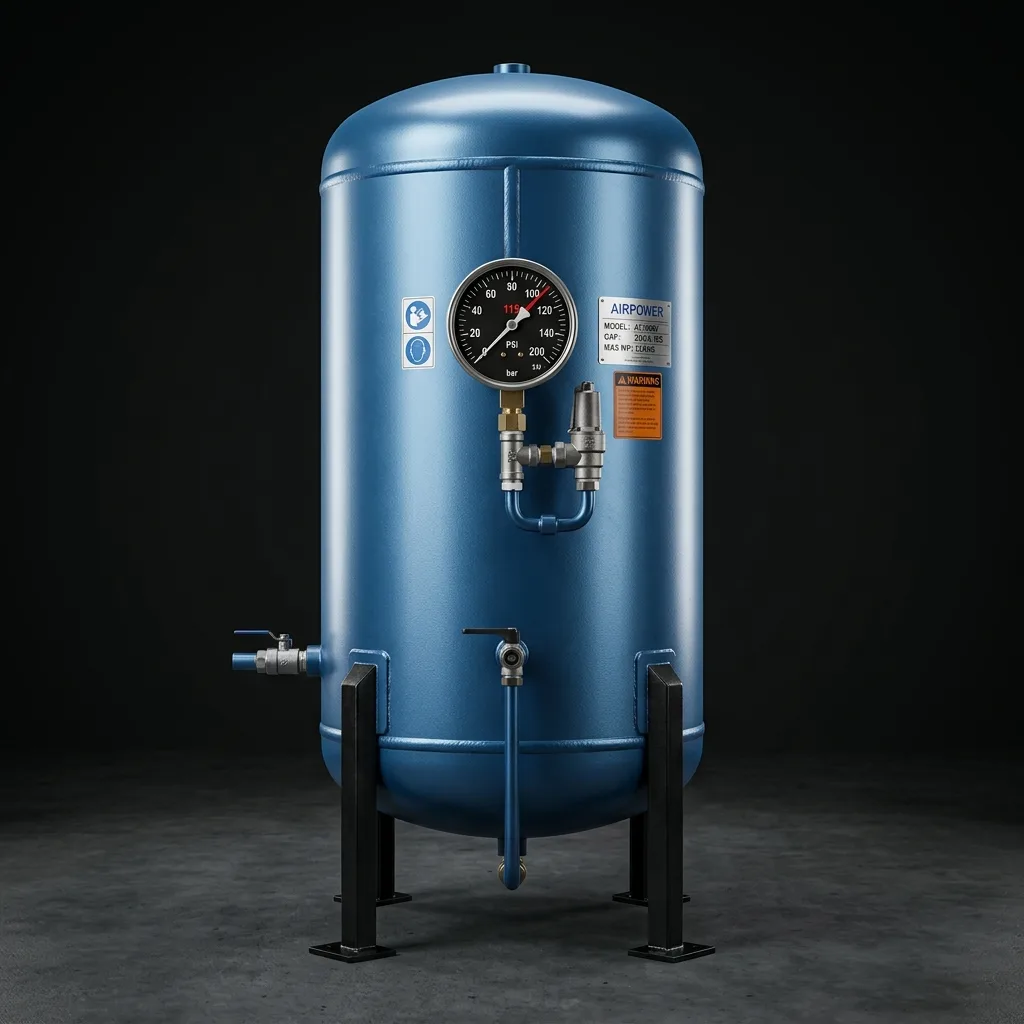
The air receiver is one of the quietest risks in your plant. It works flawlessly for years — until internal corrosion thins the wall below the critical threshold.
Pressure vessels sit in their own category among work equipment because of the energy they store. A ruptured air receiver can cause serious injury and structural damage. Periodic inspection is therefore not just good maintenance practice — it is a legal obligation.
The legal basis
In Türkiye, periodic inspection of work equipment is governed by the Regulation on Health and Safety Conditions in the Use of Work Equipment, with pressure vessels addressed specifically in its annex.
In summary:
- Pressure vessels must be inspected periodically.
- Inspection must be performed by authorised, trained personnel.
- The result must be reported and kept on record.
- The report is requested in safety inspections and workplace accident investigations.
The inspection interval follows the manufacturer’s specification; where none is given, the general intervals in the regulation apply. Your site’s risk assessment may require more frequent inspection.
Why it matters: invisible wear
An air receiver can look perfectly sound from the outside while carrying advanced corrosion within. The cause is the condensate the compressor produces. Water pooling at the bottom of the tank sustains a continuous corrosion process on the steel surface.
That process slowly thins the wall. By the time the receiver can no longer carry its design pressure, it shows no outward sign at all.
The most effective precaution is simple: drain the condensate regularly. On receivers without an automatic drain valve, this is done by hand — and frequently forgotten.
What the inspection covers
A periodic inspection typically includes:
- Document review. Manufacturing certificate, CE declaration, design pressure and volume data.
- Visual examination. External deformation, cracks, impact marks, condition of weld seams.
- Internal examination. Opening the access cover to check internal corrosion and deposits.
- Wall thickness measurement. Ultrasonic measurement of remaining steel in the shell and base.
- Safety equipment check. Safety valve set pressure and operation, gauge accuracy.
- Hydrostatic test. Where required, the receiver is filled with water and tested above design pressure.
The hydrostatic test uses water because water is incompressible; unlike testing with air, a rupture releases no explosive energy.
The safety valve: the most critical part
The safety valve is the receiver’s last line of defence. Check:
- That its set pressure matches the receiver’s design pressure
- That the valve moves freely and is not seized
- That its outlet has not been capped or diverted
Receivers with the safety valve plugged “because it kept venting” are found in the field from time to time. That exposes the tank directly to rupture risk — a valve is never capped; its fault is repaired.
Obtaining the report
The authorised inspector prepares a report containing findings and measurements. A report stamped by the Chamber of Mechanical Engineers is the widely accepted document in inspections. It should include:
- Identification data (serial number, volume, design pressure, year of manufacture)
- Examination and test methods applied
- Measurement results, especially wall thickness values
- Conformity assessment and any corrective actions
- The next inspection date
Keep the report for the receiver’s whole service life. Comparing wall thickness values across successive reports reveals the corrosion rate — and tells you in advance when the receiver will need replacing.
Practical recommendations
- Automate condensate drainage; it is the cheapest and most effective precaution.
- Keep the receiver’s nameplate legible; a worn plate complicates inspection.
- Put the inspection date in your maintenance calendar.
- Don’t box the receiver into an unventilated recess; inspection requires access.
We sell compressed air receivers and prepare receiver test reports stamped by the Chamber of Mechanical Engineers. If your receiver’s inspection is due, get in touch.